
During peaceful protests, demonstrations, camping out, and other forms of nonviolent action, civilians often feel intimidated by the presence of the police. It’s not uncommon to see small children crying when they see a police officer. In fact, for the past few months, we have seen heinous incidents where police officers kill each other or even civilians. Thus, upon reflection, police should ensure that children feel safe in their presence, as they are meant to protect the community, especially children, who are considered the future of the nation.
On February 19th, 2026, 14-year-old Arianto Tawakal was walking down a street in Tual, Maluku, with his older brother. He wasn’t demonstrating, committing a crime; instead, he was just walking—until a Brigade Mobil [Mobile Brigade] (Brimob) officer swung his tactical helmet at Arianto’s head, accusing him without any investigation of being part of an illegal street race (Ibrahim, 2026). Arianto fell, blood pouring onto the asphalt. Later that afternoon, he was pronounced dead. Masias Victoria Siahaya, as the killer, was then given a dishonorable discharge as a sanction through an ethics hearing by Kepolisian Daerah [Regional Police Force] (Polda) Maluku. Nonetheless, Masias’s dishonorable charge so far has been merely administrative, while many demand that he should face a criminal trial (Aditya & Carina, 2026).
In a span of two weeks, 18-year-old Betrand Eka Prasetyo Radiman was killed while playing with toy guns with his friends, but it was then disrupted by the arrival of police, who opened fire to disperse the crowd (LBH Makassar, 2026). As of this essay, there have been no further updates regarding the tragedy. In both cases, the police’s unilateral judgment led to the use of force as a primary intervention, while Arianto and Betrand did not pose any legitimate threat that made a forceful intervention necessary.
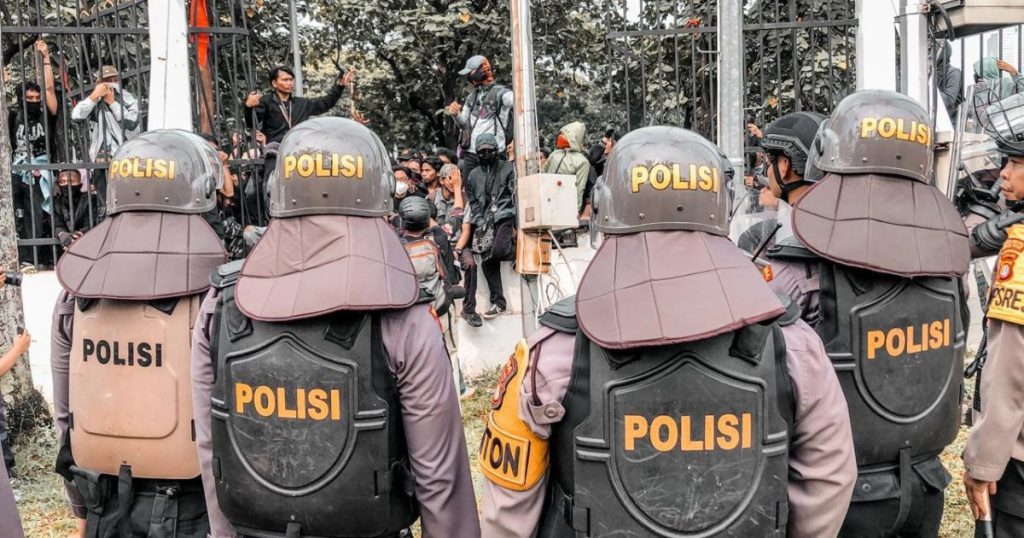
The use of force by the police is governed by the principles of necessity and proportionality, which serve as a baseline standard for any necessary “coercive” intervention (Revaldi & Yasarman, 2025). It highlights that force should be used when there is no viable alternative and should be used proportionately to the threat faced.
Surely, a teenager under 19 doing no crime is a threat to one eye? However, in these cases, disproportionate use of force occurs and exceeds what is deemed necessary to “control” the situation.
Through and through, the disproportionate use of force has been difficult to dismantle (this applies universally, not only in Indonesia), because its systematic conditions enable its recurrence. Arianto and Betrand were killed, and it is an act of force that should be held responsible and accountable. These kinds of injustices should not be shadowed by a reason of “perceived threat”. Then this raises a question: to what extent are threats necessary to be responded to by fire and repressiveness?
“Law enforcement officials, in carrying out their duty, shall, as far as possible, apply non-violent means before resorting to the use of force and firearms. They may use force and firearms only if other means remain ineffective or without any promise of achieving the intended result” (United Nations, 1990)1.
As explicitly mentioned above, officers (in this case, Police) should give a clear warning before using force. It reinforces the point that these forces should be used when unavoidable to protect life. However, neither of these cases appears to meet the regulations aforementioned. Arianto was killed violently without any warning, and Betrand was killed by a police officer’s gun disproportionately (TEMPO, 2026; Ayu, 2026). Given the power wielded by state officials, regulations are necessary to curb the potential for abuse of power, making police often blindly use force disproportionately (Rahman & Claretta, 2025; Maharani et al., 2026). The responsibilities and authorities of police officers are stipulated in the country’s constitution and are structured in such a way as to prevent any violations of responsibility and ethics by police. In Indonesia, the responsibilities of the Indonesian National Police are stipulated in Article 30 paragraph (4) of the 1945 Constitution, which states that the role of the police is “…as an instrument of the state that maintains public order and security, and is tasked with protecting, serving, and enforcing the law.” However, the police have not fully fulfilled all of the responsibilities as outlined in the Constitution. Instead of protecting the people, as rights holders, the police have repeatedly weaponized their authority through oppression and abuse of the very power they obtained from the people.2
“Pastikan penggunaan kekuatan, senjata atau alat dalam penerapan tindakan keras harus berimbang dengan ancaman yang dihadapi.” (Pasal 45 (f) Perkap 8/2009).
“Ensure that the use of force, weapons, or tools in implementing force must be proportionate to the threat faced.” (Article 45 (f) of Perkap 8/2009)
Even though these regulations exist, codified, and are demanded to be complied with, there have been gaps in accountability and the training of police that make them seem to disregard the idea and value of human rights in their own practice. To the extent of this case, one is able to question the systemic dimension of the problem. Is the Indonesian police seeing this as a matter of numbers and not lives lost? How should responsibility and accountability for someone’s death be seen?
This shall begin by deconstructing whatever is in the identity that is attached to the police institution right now. Shifting from a culture of oppression to a culture of collectivism. Rather than indoctrinating police officers in the academy and within the institution with a warrior-and-strong-enemy construction mindset, the reformation should also begin by promoting values that protect each other. It is clear that the separation of Kepolisian Negara Republik Indonesia [Indonesian National Police] (Polri) from Angkatan Bersenjata Republik Indonesia [Armed Forces of the Republic of Indonesia] (ABRI) after the New Order showcased that a civilian police force, unlike a military institution, exists not to confront enemies of the state. Thereby, they are in purpose to serve, protect, and be accountable to the civilian population it operates within. This writer sees that the relationship between the police and civilians should not be intimidating.
This range of questions then leads us to the vision of reforming the National Police of the Republic of Indonesia. While it is necessary to enforce this reformation, it will remain ineffective if the structural change is the only one. There has to be a cultural change inside to fix this “malfunction” in the process of thought circling the officers. There has to be a culture of not normalising oppressive ways, and start a culture of prioritising the rights of their own people.
To close, as mentioned by Dembour (2010), through the protest school of human rights studies, human rights should be fought for, claimed, and defended by those who are oppressed. But with Dembour’s statement, one may question how many more lives should be lost until the state acknowledges its failure? Will this change ever happen?
References
Aditya, N. R., & Carina, J. (2026, February 26). Kompolnas Minta Proses Pidana Bripda Mesias Siahaya Dipercepat. Kompas.com. https://nasional.kompas.com/read/2026/02/26/12540831/kompolnas-minta-pro ses-pidana-bripda-mesias-siahaya-dipercepat
Dembour, M.-B. (2010). What Are Human Rights? Four Schools of Thought. Human Rights Quarterly, 32(1), 1–20. https://www.jstor.org/stable/40390000 Ibrahim, R. (2026, February 23). Polisi di Tual pukul seorang anak hingga tewas, mengapa peristiwa seperti ini terus berulang? BBC News Indonesia. https://www.bbc.com/indonesia/articles/c98gwwp1rleo
LBH Makassar. (2026, March 3). Bertrand Eka Prasetyo Diduga Tewas Ditembak oleh Anggota Polsek Panakkukang, Polda Wajib Sanksi Etik dan Pidana. LBH Makassar.
https://lbhmakassar.org/press-release/bertrand-eka-prasetyo-diduga-tewas-dit embak-oleh-anggota-polsek-panakkukang-polda-wajib-sanksi-etik-dan-pidana/ Maharani, N., Rahman, S., & Makkuasa, A. (2026). Pertanggungjawaban Pidana Terhadap Aparat Kepolisian Yang Melakukan Kekerasan Terhadap Demonstrasi. Legal Dialogica, 1(1). https://jurnal.fh.umi.ac.id/index.php/legal/article/view/1577/565 Rahman, A. R., & Claretta, D. (2025). Polisi Negara Republik Indonesia Dan Kekerasan Di Media (Sebuah Analisis Wacana). Syntax Idea, 7(3), 464–474. https://doi.org/10.46799/syntaxidea.v7i3.12691 Revaldi, I. P. Y., & Yasarman. (2025). Prinsip Legalitas, Necessitas, dan Proporsionalitas dalam Penggunaan Kekuatan oleh Kepolisian: Studi terhadap Implementasi Perkap No.1 Tahun 2009. Decisio: Law Journal, 2(1), 19–24. https://doi.org/10.52249/decisio.v2i1.25
- See UN Basic Principles on the Use of Force and Firearms by Law Enforcement Officials, Eighth United Nations Congress on the Prevention of Crime and the Treatment of Offenders, Havana, 27 August to 7 September 1990, U.N. Doc. A/CONF.144/28/Rev.1 at 112 (1990), Principle 10.
https://www.ohchr.org/en/instruments-mechanisms/instruments/basic-principles-use-force-and-firear ms-law-enforcement ↩︎ - See National Commission on Human Rights (Komnas HAM) and Mobile Brigade Corps of the Indonesian national Police (Korps Brimob Polri), Handbook on Human Rights for the Mobile Brigade Corps of the Indonesian Natioanl Police (Jakarta: Komnas HAM, October 23, 2020), available at: https://www.komnasham.go.id/files/20201023-buku-saku-ham-korps-brimob-polri-$U0HTY.pdf (retrieved at March 8, 2026). ↩︎
***
This op-ed was written by Lamtiar N S M Nababan (Analyst, Human Rights Programme) and reviewed by Rickdy Vanduwin (Director, Climate Programme).