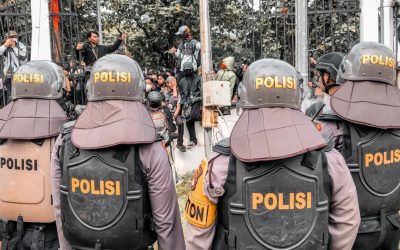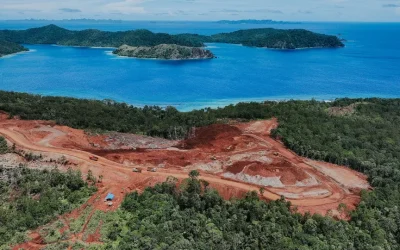
Fourteen people from Sagea, North Maluku, are facing criminalisation for protesting mining activities conducted by PT Mining Abadi Indonesia (MAI) in February 2026 (Suprayogi, 2026). The mining industry is trying to mine the karst environment in Yonelo Well, even though this karts environment serves as a sacred site for the Sagea community as well as their primary source of water reserves. Two of those individuals are Rifya Rusdi and Sulastri Mahmud, well-known young Women Environmental Human Rights Defenders (WEHRDs) affiliated with the Save Sagea Coalition.
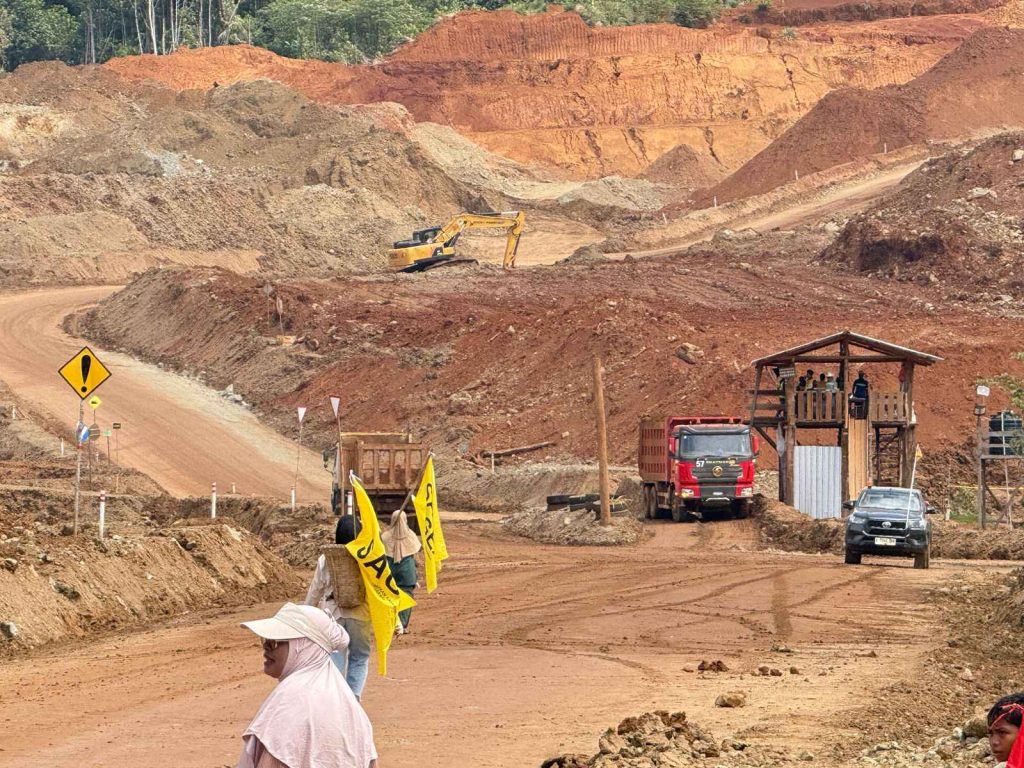
Rifya Rusdi is a WEHRD from Sagea who focuses on women’s empowerment and environmental protection. She co-founded Sekolah Pesisir Perempuan (Women Coastal School) in 2025 as a response to youth concerns about the impacts of the nickel mining industry in their villages (Hasyim, 2025). Meanwhile, Sulastri Mahmud co-founded Sanggar Boki Moruru (Boki Moruru Studio) as a platform to preserve Sawai traditions that have been gradually eroded due to the influx of migrants brought by the expansion of the Indonesia Weda Bay Industrial Park (IWIP) in Kiya village, which borders Sagea.
The criminalisation risk faced by both Rifya Rusdi and Sulastri Mahmud is not isolated, their experiences reflect a broader phenomenon in Indonesia – one in which the criminalisation of WEHRDs constitutes a form of gendered injustice embedded in a development model that prioritises economic growth while treating certain regions and communities as “expendable.”
From Sagea to Sangihe: A Recurring Pattern
Both Rifya Rusdi and Sulastri Mahmud have not been formally named as suspects, however, they have received police summons as part of the Save Sagea Coalition, which has been accused of attempting to disrupt mining activities protected under Article 162 of the Mineral and Coal Mining Law (Suprayogi, 2026). The article states that:
Any person who obstructs or disrupts mining business activities conducted by companies holding IUP, IUPK, IPR, or SIPB permits that have fulfilled the requirements referred to in Article 136 paragraph (2) shall be punished with imprisonment for a maximum of one year or a maximum fine of IDR 100,000,000 (one hundred million rupiah) – Article 162 of the Mineral and Coal Mining Law Number 4 Year 2020.
The Save Sagea Coalition has demanded that the government revoke the mining permits, given that the karst ecosystem around Boki Moruru Cave and Yonelo Well serves as their primary source of clean water. Rifya and Sulastri are the only women facing criminalisation as a result of the protest. Rifya also told Aliansi Masyarakat Adat Nusantara (Indigenous Peoples Alliance of the Archipelago) that she received negative reactions due to her activities, particularly because of her identity as a woman (Pesulima, 2026). Interviewed in separate time, Rifya told GSHR’s representative that, “the police men told me, ‘don’t overdo your protest, you’ll be arrested or something else will happen to you’. He told me this during the protest. The company representative also said the same thing to me when I entered the location and stopped the heavy vehicles.”
The same warning was not issued to her male colleague. The warning given to her perhaps due to persistent stereotypes that women should not lead the protest, they should instead be submissive and accept the outcome decided by male authoritative figures. Thus, when Rifya and other women leaders took up leadership positions, they received harsher punishment.
Rifya and Sulastri’s case is not the only case of criminalisation. Years earlier, there was a case involving Jull Takaliuang, co-initiator of Save Sangihe Island (SSI). Her advocacy to protect the environment began in the 1990s, when she was involved in efforts to protect Teluk Buyat from gold mining tailings, and she continues to actively defend Sangihe Island from both legal and illegal gold mining. Throughout her activities, she has faced physical abuse, including being choked by a member of a paramilitary group during the Teluk Buyat case and being placed under house arrest for four months (Fajar, 2015).
Furthermore, in 2025 Mongabay Indonesia mention several WEHRD who face criminalisation, such as Fatrisia Ain, Coordinator of Forum Petani Plasma Buol (Buol Plasma Farmers Forum); Seniwati, member of Buol Plasma Farmers Forum; Elda Nenti, member of Komunitas Perempuan Desa Pasar Seluma (Seluma Market Village Women’s Community); and Hasilin, member of Aliansi Mahasiswa dan Masyarakat Sulawesi Tenggara Menggugat (The Alliance of Students and Communities of Southeast Sulawesi Appeal) (Tamimi, 2025).
The 2025 Annual Report of Komnas Perempuan (National Commission on Violence Against Women) recorded that there were 376,529 cases of violence against women in 2025 (Komnas Perempuan, 2026). The number of cases increased by 14.07% compared to the previous year, making 2025 the highest recorded year in the past decade. Komnas Perempuan also recorded 20 cases related to natural resource conflicts, agrarian disputes, and evictions. They report that Women Human Rights Defenders (WHRDs) experience various forms of violations, ranging from criminalisation and intimidation to arbitrary detention.
Maria Ulfah Anshor, Chairperson of Komnas Perempuan, highlighted the dual vulnerability faced by WEHRDs, “besides intimidation and criminalisation, they face gender-based violence, attacks on reputation, sexual harassment in both physical and online spaces, moral stigmatisation, and pressure on their families” (UNDP Indonesia, 2026). Strategic Lawsuits Against Public Participation (SLAPP) are often used to silence or criminalise environmental defenders––including WEHRDs––particularly given the weak legal protection framework in Indonesia.
Worldwide, protecting the WEHRDs is still faced with multiple challenges. The violation case against WEHRDs is difficult to document due to intersecting marginalities and stakeholders interested in covering up the abuse. Most of the environmental conflict documentations also do not have gender segregated data. Tran et al., (2020) analyse 35 cases of WEHRD’s killing case worldwide. They found that there is more information related to WEHRDs killing reported in countries benefitting from extractivism activities compared to countries that export extractivist goods and labor and the case against white women are overrepresented compared to BIPOC (Black/Indigenous/People of Color) despite BIPOC women shouldering more of the burden and consequences of the environmental destruction. Therefore, from Sagea to Sangihe, even worldwide, the patterns of vulnerabilities and lack of protection for WEHRDs could be recognised.
Rethinking “Development” and the Urgent Need to Protect those Who Protect
Indonesia’s Long-Term Development Plan 2025-2045, known as “Indonesia Emas,” outlines five key visions, with the first aiming to achieve income per capita levels comparable to developed countries (Article 5 of the Long-Term Development Plan 2025-2045 Law Number 59 Year 2024). To achieve this vision, the Indonesian government has been approving a large number of National Strategic Projects, including those related to the exploration and exploitation of natural resources. One such project is the development of nickel downstreaming enclaves in Morowali Regency, Central Sulawesi, and Central Halmahera Regency, North Maluku. These enclaves are framed as part of a just transition to support the Electric Vehicle (EV) agenda, however, reports from the ground suggest multiple violations and instances of criminalisation against Indigenous communities and environmental defenders, including the case of Rifya Rusdi and Sulastri Mahmud.
The prioritisation of economic growth within the development agenda, while “sacrificing” certain regions and communities, aligns with the concept of necropolitics introduced by Achille Mbembe. He defines necropolitics as the power held by the imperium––in this case, the state––to determine who may live and who must die, including through the management of populations involved in resource extraction (Mbembe, 2003). If, during this process, the state produces zones that become unlivable, these areas and their communities are treated as necessary sacrifices to sustain state power. Within this framework, it is unsurprising that WEHRDs organise and resist, however, such resistance places them at significant risk, particularly in a context where Indonesia lacks a strong legal framework to protect their work.
Indonesia has several laws and regulations intended to protect Human Rights Defenders (HRDs), such as anti-SLAPP provisions under Law Number 32 Year 2009. However, these measures remain inadequate to address the specific vulnerabilities faced by HRDs, particularly WEHRDs (Muamar, 2026). Thus, Indonesia faces two major tasks: first, to rethink and redefine its development approach so that it does not prioritise economic growth at the expense of rendering certain regions unlivable; and second, to strengthen protections for the women who defend the environment.
On the development front, alternative approaches such as Buen Vivir offer a useful point of reflection. Originating from Andean Indigenous worldviews and adopted in Ecuador’s 2008 Constitution, Buen Vivir shifts the focus of development away from extractive growth toward harmony between humans, communities, and nature. While not without its limitations, it signals a broader transformation––one that prioritises inclusion, ecological balance, and respect for diverse ways of living (Villalba, 2013).
In the Indonesian context, this shift could begin by placing Indigenous perspectives at the centre of development planning, including through the recognition of the RUU Masyarakat Adat (Indigenous People Bills). Rather than treating nature as a commodity, development must recognise the interdependence between people and their environment. This also requires ensuring free, prior, and informed consent (FPIC) for communities affected by extractive projects. In the long term, Indonesia must chart its own development path––one that does not simply replicate industrial models, but reflects its social and ecological realities.
At the same time, protecting WEHRDs requires stronger and more responsive legal and institutional frameworks. This includes revising existing laws, such as the Witness and Protection Law (Faturahman, 2026), and strengthening coordination among institutions like Komnas Perempuan, Komnas HAM (the National Commission of Human Rights), and LPSK (Witness and Victim Protection Agency). Protection efforts must also be supported by better data on gender and environmental conflicts, as well as reforms within law enforcement institutions when handling such cases. Without these measures, legal frameworks risk being used not to protect, but to criminalise those who defend the environment.
References
Fajar, J. (2015, December 21). Jull Takaliuang: Tambang Membuat Masyarakat Kehilangan Keseimbangan. Mongabay.co.id. https://mongabay.co.id/2015/12/21/jull-takaliuang-tambang-membuat-masyarakat-kehilangan-keseimbangan/
Faturahman, A. A. (2026, April 7). Mengapa Perlindungan Pembela HAM Perlu Masuk Revisi UU LPSK. Tempo. https://www.tempo.co/politik/perlindungan-pembela-ham-uu-lpsk-2127064
Hasyim, I. (2025, September 9). Perintis Sekolah Perempuan dari Sagea. Tempo. https://www.tempo.co/lingkungan/sekolah-perempuan-sagea-halmahera-2068031
Komisi Nasional Anti Kekerasan terhadap Perempuan. (2026, March 6). Siaran Pers Komnas Perempuan Peluncuran Catatan Tahunan Kekerasan terhadap Perempuan 2025. https://komnasperempuan.go.id/siaran-pers-detail/siaran-pers-komnas-perempuan-peluncuran-catatan-tahunan-kekerasan-terhadap-perempuan-2025
Mbembe, A. (2003). Necropolitics (L. Meintjes, Trans.). Public Culture, 15(1), 11–40. https://muse.jhu.edu/article/39984
Muamar, A. (2026, March 15). Jalan Mundur Pelindungan Pembela HAM di Indonesia. Green Network Asia – Indonesia. https://greennetwork.id/soft-news/jalan-mundur-pelindungan-pembela-ham-di-indonesia/
Pesulima, J. F. M. (2026, March 12). Tim Advokasi Minta Penyidikan Masyarakat Adat Sagea -Kiya Dihentikan: Jangan Kriminalisasi Warga Penolak Tambang. http://www.aman.or.id/news/read/2325
Suprayogi, Y. (2026a, February 23). Perempuan Koalisi Save Sagea Tak Gentar Kriminalisasi. betahita.id. https://betahita.id/news/detail/11866/perempuan-koalisi-save-sagea-tak-gentar-kriminalisasi.html?v=1772020596
Suprayogi, Y. (2026b, March 5). Kriminalisasi Warga Antitambang di Sagea Berlanjut. betahita.id. https://betahita.id/news/detail/11900/kriminalisasi-warga-antitambang-di-sagea-berlanjut.html?v=1772667000
Tamimi, M. (2025, March 24). Kala Kriminalisasi Hantui Perempuan Pejuang Lingkungan. Mongabay.co.id. https://mongabay.co.id/2025/03/24/kala-kriminalisasi-hantui-perempuan-pejuang-lingkungan/
Tran, D., Martínez-Alier, J., Navas, G., & Migorría, S. (2020). Gendered Geographies of Violence: A Multiple Case Study Analysis of Murdered Women Environmental Defenders. 27(1). https://doi.org/10.2458/v27i1.23760
Undang Undang Nomor 59 Tahun 2024 Tentang Rencana Pembangunan Jangka Panjang Nasional Tahun 2025 – 2045, No. 59 (2024). https://drive.google.com/file/d/1-nKszabAh6J8Nj6ejrCg7NcI5FFs6w00/view
Undang-Undang (UU) Nomor 3 Tahun 2020 Tentang Perubahan Atas Undang-Undang Nomor 4 Tahun 2009 Tentang Pertambangan Mineral Dan Batubara, 3, Pemerintah Pusat (2020). https://peraturan.bpk.go.id/Details/138909/uu-no-3-tahun-2020
UNDP Indonesia. (2026, March 17). Komnas Perempuan and UNDP Conclude National Consultation to Strengthen Protection Policies for Women Environmental Human Rights Defenders in Indonesia. UNDP Indonesia. https://www.undp.org/indonesia/press-releases/komnas-perempuan-and-undp-conclude-national-consultation-strengthen-protection-policies-women-environmental-human-rights
Villalba, U. (2013). Buen Vivir vs Development: A Paradigm Shift in the Andes? Third World Quarterly, 34(8), 1427–1442. https://doi.org/10.1080/01436597.2013.831594
***
This op-ed was written by Rizki Anggarini Santika Febriani (Analyst, Human Rights Programme) and reviewed by Rickdy Vanduwin (Director, Climate Programme) and Anatasia Wahyudi (Officer, Communications).